
An informative video covering the extremely damaging effects of antipsychotics on the human brain and specific side effects.
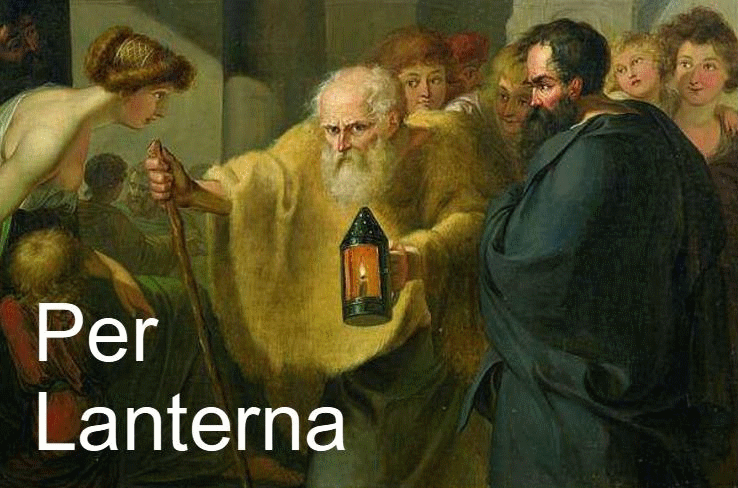
This clear, evidence-based video from Dr. Ysep (a former FDA physician and pharmaceutical drug safety expert) shines a much-needed lantern on one of psychiatry’s darkest corners: the well-documented but rarely disclosed long-term neurological damage caused by antipsychotics.
Using monkey studies (Dorph-Petersen 2005) and large human trials (Fusar-Poli 2013), the presentation shows that these drugs — Haldol, Olanzapine, Risperidone, Abilify, etc. — are associated with measurable brain shrinkage, particularly in the frontal lobes responsible for executive function and planning. The damage correlates with cumulative dose, not the severity of the underlying condition. TardiveAppearing late, e.g. appearing late in the history of taking... dyskinesiaOccurs as a result of taking psychotropic drugs and manifest... (involuntary movements that can persist after the drug is stopped) affects 20–30% of long-term users, while cognitiveRelating to cognition; the mental action or process of acqui... More decline often accompanies it. Many patients are never warned.
The video is refreshingly honest: short-term symptom suppression comes at the potential cost of irreversible neuronal loss. It also offers practical harm-reduction advice — lowest effective dose, functional medicine workups, antioxidants such as vitamin E and CoQ10, and peer support like the Hearing Voices Network — rather than blind promotion of more drugs.
For anyone prescribed these “chemical lobotomies” (psychiatry’s own early description of chlorpromazine), this is essential viewing. Psychiatry’s failure to cure, combined with its eagerness to prescribe brain-altering chemicals for decades, continues to produce the very brain damage it then attributes to the “illness.” Another strong piece of evidence that all is not well in the psychiatric drug business.
Newsletter Signup
Signup for our newsletter and don't miss a step. Follow the lantern...