
The real story of psychiatry
Content
- Background and beginning of psychiatry
- Segregation in asylums
- A lost renaissance for mental health
- Wilhelm Wundt and ‘physiological psychology’ – the materialist foundation
- Emil Kraepelin and biological psychiatry – Germany’s path to catastrophe
- The extremely poor situation in Germany – from speculation to horror
- Speculative thought leads to nothing except harm
- Aktion T4 – German psychiatry’s descent into hell
Background and beginning of psychiatry
While there were dozens of personalities, hundreds of thousands of words written, and often pretentious complexities on the subject of psychiatry in the 19th and 20th centuries, we are going to concentrate on just a few that are particularly relevant to the state of psychiatry today.
Segregation in asylums

For over 1,000 years, societies primarily segregated the mentally troubled (when family care was impossible) into lunatic asylums, often tied to hospitals or churches. The 18th century saw the rise of private, profit-driven “trade in lunacy.” By the late 19th century, massive state asylums housed growing numbers. Conditions and treatments were sometimes appalling and occasionally improved, but never matched by any genuine science that could identify causes or deliver cures.
A lost renaissance for mental health
This should have produced a true renaissance in understanding and treating mental distress. It did not.
The scientific revolution (16th–17th centuries) and the Enlightenment (Age of Reason) sparked fresh inquiry across philosophy'In a broad sense, philosophy is an activity people undertak... More, science, medicine, politics, and individual freedoms. This should have produced a true renaissance in understanding and treating mental distress. It did not.
Two main schools emerged by the late 19th century: psychoanalysis (Freud, Breuer, etc.), addressing mind, thought, behavior, and personality; and “biological psychiatry,” viewing all conditions as purely physical brain diseases. The latter originated primarily with Emil Kraepelin, heavily influenced by Wilhelm Wundt. Neither ever found causes or cures. Biological psychiatry (Kraepelin’s model) has dominated ever since.
Wilhelm Wundt and ‘physiological psychology’ – the materialist foundation
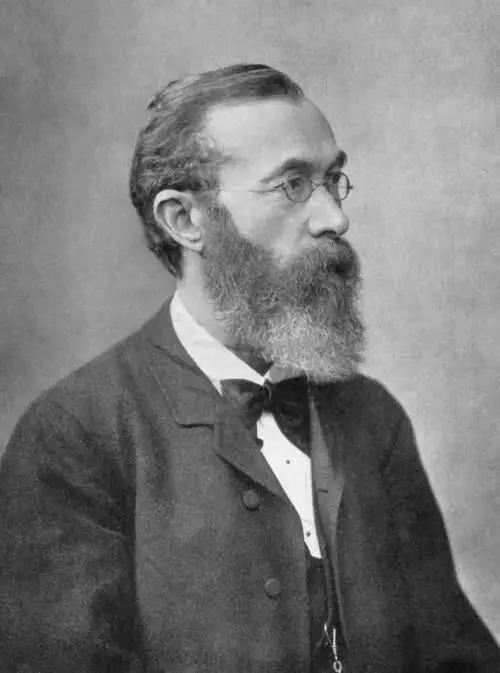
Originally trained in physiologyA study of bodies and their parts and how they work. More, Wilhelm Wundt (1832–1920) founded the world’s first Laboratory of Experimental Psychology at Leipzig in 1879 and positioned himself as a philosopher. He deliberately broke psychology from its philosophical roots, creating “physiological psychology.”
With no empirical evidence beyond his opinions, Wundt reduced man to a body with a brain and nervous system — directly opposing centuries of philosophy'In a broad sense, philosophy is an activity people undertak... More, culture, and religious understanding. Mind, consciousness, will, ethics, creativity, and spirituality were dismissed as illusions or mere physiological responses. Mental deterioration, in his view, could only stem from biological (brain/nervous system) defects.
“The Cartesian soul can no longer exist in face of our present-day physiological knowledge of the physical substratum of our mental life.”
— Wilhelm Wundt, An Introduction to Psychology, 1911.
“General psychical• Of special mental abilities or events that currently canno... disturbances are always symptoms of diseases of the brain…”
— Wilhelm Wundt, Outlines of Psychology, 1897.
Wundt presented speculation as science and yet, students and visitors flocked to Leipzig from Europe and America. His ideas spread widely (including into education and the humanities) but found their most extreme expression in Germany. No evidence has ever validated Wundt’s core claims — then or now.
Emil Kraepelin and biological psychiatry – Germany’s path to catastrophe
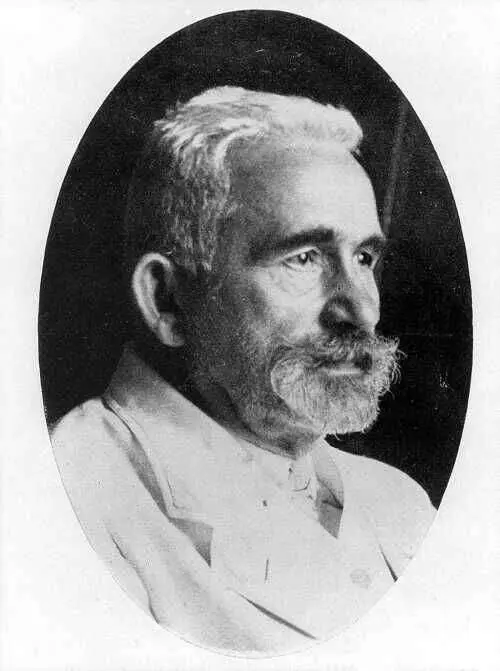
Kraepelin (1856–1926), one of Wundt’s most devoted followers, studied under him in 1877 and returned for post-doctorate work (1882–83) in Wundt’s lab, conducting drug experiments on reaction times. He extended Wundt’s materialism: all “mental illness” was purely biological/brain disease. Diagnosis and treatment focused on symptoms of supposed physical disorders; mind, environment, and the person were secondary or irrelevant.
Kraepelin never found biological causes or cures despite lifelong effort. Yet his model became dominant. He embraced eugenics (degenerationEugenics. Degeneracy is a theory that was popular in the lat... More theory), arguing “civilized” societies produced more mental defects, justifying social control. He and successor Ernst Rüdin shaped German psychiatric research, including the Kaiser Wilhelm Institute (later Max Planck), funded in part by the Rockefeller Foundation.
And at the end of his career, even Kraepelin admitted that he had no substantial understanding of the mind and it was all mere speculation:
“The magnitude of the efforts to be expended on our task, the impenetrable darkness that hides the innermost workings of the brain and their relation to psychic manifestations, and finally the inadequacy of our instruments for dealing with extremely complicated issues, must cause even the most confident investigator to doubt whether it is possible to make any appreciable progress toward psychiatric knowledge and understanding; indeed, it has not been very long since some of our best researchers turned to related disciplines in search of rewards not afforded by psychotherapy.”
Emil Kraepelin. 1917. One Hundred Years Of Psychiatry.
Yet, within a few years, not only was this lack of scientific credibility of psychiatry confirmed but the world was left reeling from the monstrous legacy of Wundt and Kraepelin – German psychiatry – when the truth was finally known.
German Psychiatry – From Speculation to Horror
Germany in the late 19th/early 20th centuries was a cauldron of rapid industrialization, militarism, nationalism, and pseudoscientific materialism. Wundt’s reductionist view (man as machine, higher faculties as illusion) and Kraepelin’s biological/eugenic psychiatry provided “scientific” cover for devaluing human life. “Undesirables” (the mentally ill, disabled, Jews, political dissidents, etc.) were framed as biological threats to the geneA hereditary part of an individual, located in each of his c... More pool and racial health.
This was not fringe: leading psychiatrists influenced policy. Kraepelin’s ideas fed Nazi racial hygiene. After 1933, German psychiatry enthusiastically supported sterilization, then Aktion T4 — the systematic murder of tens of thousands of psychiatric patients as “life unworthy of life.” Techniques and personnel from T4 directly shifted to the Holocaust’s death camps.
Wundt died in 1920 and shorty after, Kraepelin in 1926. Within little more than a decade however, their framework directly implemented by their students, enabled one of history’s greatest atrocities. Psychiatry, ostensibly meant to heal, provided intellectual justification for mass murder. The descent into hell was complete.
Speculative thought leads to nothing – except harm
David Edsall (Dean, Harvard Medical School, 1930) noted psychiatry’s domination by “elusive and inexact methods… speculative thought” with little real knowledge. In Germany, that speculation had deadly consequences. The Rockefeller Foundation’s later efforts to “rescue” psychiatry as science (detailed in the next chapter) failed. The lack of foundation was simply masked by pharmaceuticals.
Neither Wundt’s philosophy'In a broad sense, philosophy is an activity people undertak... More nor Kraepelin’s biology ever delivered causes or cures. They delivered a materialist worldview that, in Germany’s turbulent context, contributed to catastrophe.
“In most places psychiatry now is dominated by elusive and inexact methods of study and by speculative thought. Any efforts to employ the more precise methods that are available have been slight and sporadic. Often they have not been used at all. It is, of course, more difficult to use them in psychiatry than in the more definitely physical aspects of medicine, but there has been little employment of the methods that are open to use, in psychiatry itself, and there has been little change in real knowledge.“
David L. Edsall. Dean of Harvard Medical School. 1930. 1
“….in psychiatry itself, and there has been little change in real knowledge.“
David L. Edsall. Oct 3, 1930
Aktion T4 – German psychiatry’s descent into hell
Going beyond the words of David Edsall, what were the consequences of the Wundt/Kraepelin theory on mental health in the country most affected? Did this theory that all mental illnesses are entirely diseases of the brain improve the treatment of the mentally ill in Germany? Were people being cured?
Kraepelin’s ‘schizophrenia’ and overcrowded asylums
In 1893 Emil Kraepelin put forth his definition for ‘dementiaA term loosely describes a condition where there is a loss o... praecox’ or what became known as schizophrenia. Including the influence of wars and other social factors, Kraepelin’s new ‘disease’ also resulted in large increases in people being sent to asylums ( in many other countries as well as Germany). While defined, Kraepelin offered no cause nor cure for the condition (or any other ‘mental illness’) and German asylums were soon seriously overcrowded – the number of patients in asylums was estimated to be some 300,000 by 1929. 2 3
Psychiatry’s solution: sterilization or murder
Having no idea of the actual cause or cure of what they were calling mental illness, German psychiatry’s only solutions were firstly to sterilize the mentally ill and disabled and secondly, to simply murder them.
“Genetic psychiatry’ and sterilization of the mentally ill
On July 14, 1933, primarily based on recommendations from German psychiatric eugenics, the German Reich (Nazi) government passes the Law for the Prevention of Offspring with Hereditary DiseasesJuly 14, 1933. The German Reich (Nazi) government passes "La... More 4
As a result, it is estimated that 400,000 persons were sterilized between 1934 and 1945:
“A diagnostic breakdown of sterilizations for 1934, the only year for which such figures are available, indicates that 49% of the sterilized individuals had “congenital feeblemindedness,” 26% schizophrenia, 16% congenital epilepsy, and the remainder other diagnoses”
E.Torrey and R H.Yolken. Psychiatric Genocide: Nazi Attempts to Eradicate Schizophrenia. 5
In this perverse extension of ‘biological psychiatry’ into eugenics, we see the hand and direct influence on Emil Kraepelin through his former students and proteges.

“Kraepelin’s pupil and successor as head of the Kaiser Wilhelm Institute for Psychiatric Research, Ernst Rüdin, who later was involved, together with Fischer, Baur, Lenz, and others, in the introduction of the “law of prevention of hereditary diseased offspring” (“Gesetz zur Verhinderung erbkranken Nachwuchses”) greatly acknowledged Kraepelin’s attitude. In a paper published in 1910 in the Archiv für Rassen – und Gesellschaftsbiologie (Archives of Racial and Societal Biology), which was one of the leading journals in the field of genetics and eugenics, and of which Rüdin was co-editor-in-chief, he reasoned that the medical care for the insane was a distortion of the natural laws of the survival of the fittest and that medicine would be obliged to clean the genetic pool of the Volk in order to prevent ongoing degenerationEugenics. Degeneracy is a theory that was popular in the lat... More.”
Martin Brune. On human self-domestication, psychiatry, and eugenics.6
In addition to his direct contributions to the writing of the ‘Law of prevention of hereditary diseased offspring’, Ernst Rudin, was also President of the Society of German Neurologists and Psychiatrists (GDNP), later renamed the German Association for Psychiatry, Psychotherapy and Neurology (DGPPN) from 1935 to 1945. He had considerable influence in propagating his and the ideas of his mentor Kraepelin, throughout the psychiatric and German culture.
So influential was Rudin in doing so that he was nicknamed the “ReichsfuhrerTaken from the title 'Reichsführer-SS', a title and rank tha... for Sterilization” by his NAZI cronies. 7
Another of Kraepelin’s former students and proteges was Robert Gaupp who studied under Kraepelin in 1901 and worked with him at the Universities of Munich and Heidelberg.
“Gaupp’s school gave rise to constitutional research and clinical psychotherapy. In particular, his advocacy of “racial hygiene” forced sterilization, which he advocated in lectures and contributions such as “The Sterilization of the Mentally and Morally Ill and Inferior” (1925) and “The Sources of the DegenerationEugenics. Degeneracy is a theory that was popular in the lat... More of Man and people and the Ways of Repentance” (1934), prepared the ground for National Socialist eugenics.”
“Nachlass Professor Dr. Robert Gaupp” Landesarchiv Baden-Württemberg.8
Aktion T4: murder of the mentally ill and disabled.
Not satisfied with their sterilization programs, German psychiatrists under the direction of Kraepelin proteges and in collusion with the now NAZI German government under Adolph Hitler, pushed to implement their existing plans to exterminate the occupants of asylums and others designated as mentally disabled – Aktion T4.
In 1939 a draft law, a memorandum on “the destruction of life unworthy of life” included the following provision:
“The life of a person, who because of incurable mental illness requires permanent institutionalization and is not able to sustain an independent existence, may be prematurely terminated by medical measures in a painless and covert manner.”
E.Torrey and R H.Yolken. Psychiatric Genocide: Nazi Attempts to Eradicate Schizophrenia. 9
While this law was never published, Hitler put Aktion T4 into effect by direct order and promised immunity for those involved. The order was actually signed in October but backdated to 1 Sept 1939.
The order reads:
“Reich Leader Bouhler and Dr. Brandt are entrusted with the responsibility of extending the authority of physicians, to be designated by name, so that patients who, after a most critical diagnosis, on the basis of human judgment [menschlichem Ermessen], are considered incurable, can be granted mercy death [Gnadentod].”
A Hitler.
“The asylums competed with each other and celebrated achieving targets. For example, the Hadamar asylum… “celebrated the cremation of its ten-thousandth patient in a special ceremony, where everyone in attendance—secretaries, nurses and psychiatrists—received a bottle of beer for the occasion.”
E. Fuller Torrey and Robert H. Yolken. Psychiatric Genocide: Nazi Attempts to Eradicate Schizophrenia
“In October 1939, the directors of all German psychiatric hospitals were asked to fill out forms indicating the diagnosis and capacity for useful work of each patient, although they were not told what the forms were for. These forms were then assessed by a committee of selected psychiatrists who targeted approximately 70,000 patients for death, 1 for every 1000 people in Germany, which was the initial goal of the program.”
E.Torrey and R H.Yolken. Psychiatric Genocide: Nazi Attempts to Eradicate Schizophrenia. 10 11
Six ‘killing centers’ were established and the patients about to die were bused to their doom.
“In January 1940 the first 20 patients were led into the ‘shower rooms’ at the Brandenburg Asylum and killed. The asylums competed with each other and celebrated achieving targets. For example, the Hadamar asylum… “celebrated the cremation of its ten-thousandth patient in a special ceremony, where everyone in attendance—secretaries, nurses and psychiatrists—received a bottle of beer for the occasion.”
E.Torrey and R H.Yolken. Psychiatric Genocide: Nazi Attempts to Eradicate Schizophrenia. 12
The Aktion T4 program was ‘officially’ ended after the first 70,000 deaths however in practice was extended throughout areas of NAZI Germany’s control to the end of World War II. Originally only involving asylum patients killed through the use of carbon monoxide gas, the program was extended into Germany and occupied territories where patients were also killed in their asylums by lethal injections, being shot or an estimated 100,000 simply left to starve. 13
Between 1940 and 1945 it is estimated that more than 270,000 disabled and asylum patients – men, women, and children – were murdered in Germany, Austria, Poland, and parts of what is now the Czech Republic.

While under the control of the NAZI SS, the medical director of Aktion T4 was psychiatrist Paul Nitsche, who was a protege of Kraepelin and had worked directly under his supervision at Munich University.
Nitsche was the director of the Sonnenstein Hospital from 1928 to 1939 which became one of the Aktion T4 killing centers. 14
In 1940 Nitsche became the Deputy Director of Aktion T4 and by 1941 the program’s chief medical officer and psychiatrist who had the duty of selecting people who would be labeled “unworthy of life” – those who were to die. He sent thousands to their deaths – including at least 60 he personally killed through human experimentation. 15
After World War II, Nitsche was tried for his crimes against humanity and executed by guillotine in March 1948.
“They acted on their own”
Through all of the excesses of Aktion T4 it should never be assumed that German psychiatrists were ever under threat or duress regarding their crimes:
“The tragedy is that the psychiatrists did not have to have an order. They acted on their own. They were not carrying out a death sentence pronounced by someone else. They were the legislators who laid down the rules for deciding who was to die; they were the administrators who worked out the procedures, provided the patients and places, and decided the methods of killing; they pronounced a sentence of life or death in every individual case; they were the executioners who carried out or – without being coerced to do so – surrendered their patients to be killed in other institutions; they supervised and often watched the slow deaths.”
F Wertham. A sign for Cain: An exploration of human violence. 1966. 16

This display is on the wall of what was the Sonnenstein killing center.
The display shows the layout of the killing center with a waiting room, gas chamber, morgue, crematorium, and chimney room.
“Employees drove the patients and residents from mental hospitals and homes to the killing centre by buses. Physicians [psychiatrists] working for Organization T4, had classified them in terms of the Nazi ideology, as ‘unworthy of living’. Nurses guided them to the commission supervised by doctors on the ground floor of the building. The doctors verified the victims’ identity and assigned them a fraudulent cause of death.”
Sonnenstein killing center display

The Recording Room of the Hartheim Killing Center.
During the first use of the killing centers under Aktion T4, patients’ details would be recorded, and then they were taken down the corridor on the left to the gas chamber.
The lists on the walls are the names of persons who were executed in the gas chamber.
As just one of the seven killing centers, during the official Aktion T4 executions, 18,269 patients were murdered over a period of 6 months from 1940 to 1941. The gas chamber continued to be used right up to 1945 where it is estimated an additional 12,000 patients and concentration camp inmates were also executed.

Archeological digs beside the Hartheim Castle have found remnants of the Aktion T4 killings.
After death, the bodies were incinerated and bones ground to dust. What remained of both bodies and belongings the patients had brought with them were thrown into the Danube or buried in the Hartheim grounds.
Source of the NAZI racial hygiene policy
To assign the horrors of Aktion T4 and the NAZI racial hygiene policies solely to Adolph Hitler and his cronies is nonsense.
It is more a case of the NAZI party and German psychiatry using each other to forward their own ends. As Kraepelin’s successor, Ernst Rüdin said:
“The significance of Rassenhygiene [racial hygiene] did not become evident to all aware Germans until the political activity of Adolf Hitler and only through his work has our 30-year-long dream of translating Rassenhygiene into action finally become a reality.”
Ernst Rüdin. 17
Rudin was well known to Adolph Hitler and there would have been no possible misconception of Kraepelin’s hand in all of this as well.
“In 1939 Rudin was presented a Gothe Medal by Hitler himself as the ‘meritorious pioneer of the racial-hygienic measures of the Third Reich’.” 18
In 1944, Rudin received a bronze medal bearing the Nazi eagle from Adolf Hitler, who lauded him as the ‘pathfinder in the field of hereditary hygiene’. 19
“…dreamers, poets, swindlers and Jews” possess ‘distinctly hysterical traits’ and fall outside the bounds of normality, adding that Jews exhibit “frequent psychopathic disposition.” These tendencies, he noted, are most importantly accompanied by “their harping criticism, their rhetorical and theatrical abilities, and their doggedness and determination”
Emil Kraepelin. 1919. 20
And another Kraepelin protege Robert Krupp went even further, describing the work of Kraepelin as the foundation of the NAZI racial hygiene laws which Krupp was implementing:
“A decade later in 1938, Robert Gaupp believed that his [Kraepelin] work was ‘indestructible’ and that it comprised nothing less than the ‘precondition of all research’ in psychiatry and the foundation of Nazi racial hygiene laws.”
Eric J. Engstrom, Matthias M. Weber. Making Kraepelin history: a great instauration? 21
And of Emil Kraepelin himself? Kraepelin had an entirely perverse view of his fellow men and while dying in 1926, undoubtedly would have rejoiced at the actions of NAZI German exterminators.
Blueprint for The Holocaust
While Aktion T4 was appalling enough, it should be known that the collusion between the NAZIs and German psychiatry aimed at a far greater evil.
The planning and operation of the Aktion T4 killing centers became the blueprint for The Holocaust, right down to such details as the gas chambers being built to appear like shower rooms. Many of the personnel from Aktion T4 simply transferred to the concentration camp extermination programs.
“According to the records, 275,000 people were put to death in these killing centers. Ghastly as this seems, it should be realized that this program was merely the entering wedge for exterminations of far greater scope in the political program for genocide of conquered nations and the racially unwanted. The methods used and personnel trained in the killing centers for the chronically sick became the nucleus of the much larger centers in the East, where the plan was to kill all Jews and Poles and to cut down the Russian population by 30,000,000.”
Doctor Leo Alexander. Medical advisor during the Allied trials of crimes against humanity by NAZI doctors and a contributor to the ‘Nuremberg Code’ that covered human experimentation which was written after the trials. From ‘Medical Science Under Dictatorship’ July 1949. 22 23
Had the NAZIs succeeded and been victorious in World War Two, one is left with the possibility of a horror future where NAZI conquests would be followed by psychiatric killing programs of the mentally ill and disabled and other unwanted populations. It is indeed the fantastical stuff of nightmares and yet it has already occurred in Aktion T4 and The Holocaust.
Influence On Today
And what of the influence of Wilhelm Wundt and Emil Kraepelin on our world today?
‘Biological psychiatry’ was shunned for a time after the horrors of German psychiatry in World War II became evident.
With the advent of widespread use of psychotropicThings, including drugs, that affect a person's mental state... More drugs, the principles of Kraepelin’s ‘biological psychiatry’ were resurrected by psychiatry in the 1970s in what has been called the ‘neo-Kraepelin’ era. These principles formed the basis for major revisions to Diagnostic and Statistical Manual of Mental Disorders (DSM III) and all later versions.
The speculation of Kraepelin reaches throughout international psychiatry.
- Dean David L. Edsall; Mental Health Memorandum Regarding Possible Psychiatric Developments; October 3, 1930. Rockefeller Archive
- E. Fuller Torrey and Robert H. Yolken. Psychiatric Genocide: Nazi Attempts to Eradicate Schizophrenia. Schizophr Bull. 2010 Jan; 36(1): 26–32.
- Burleigh M. Death and Deliverance: ‘Euthanasia’ in Germany c. 1900–1945. Cambridge: Cambridge University Press
- Law for the Prevention of Offspring with Hereditary Diseases
- E. Fuller Torrey and Robert H. Yolken. Psychiatric Genocide: Nazi Attempts to Eradicate Schizophrenia. Schizophr Bull. 2010 Jan; 36(1): 26–32.
- Martin Brune. On human self-domestication, psychiatry, and eugenics. Philos Ethics Humanit Med. 2007; 2: 21.
- Max Planck Institute of Psychiatry.
- “Nachlass Professor Dr. Robert Gaupp” Landesarchiv Baden-Württemberg.
- E. Fuller Torrey and Robert H. Yolken. Psychiatric Genocide: Nazi Attempts to Eradicate Schizophrenia. Schizophr Bull. 2010 Jan; 36(1): 26–32.
- E. Fuller Torrey and Robert H. Yolken. Psychiatric Genocide: Nazi Attempts to Eradicate Schizophrenia. Schizophr Bull. 2010 Jan; 36(1): 26–32.
- Michael Robertson Astrid Ley Edwina Light. The First into the Dark: The Nazi Persecution of the Disabled. 2019.UTS ePRESS
- E. Fuller Torrey and Robert H. Yolken. Psychiatric Genocide: Nazi Attempts to Eradicate Schizophrenia. Schizophr Bull. 2010 Jan; 36(1): 26–32.
- Mary V. Seeman. What Happened After T4?: Starvation of Psychiatrie Patients in Nazi Germany. International Journal of Mental Health Vol. 35, No. 4, The Holocaust and the Mentally III: Part II: Starvation (WINTER 2006-7)
- Rael D. Strous, M.D., M.H.A., Annette A. Opler, Ph.D., Lewis A. Opler, M.D., Ph.D. Reflections on “Emil Kraepelin: Icon and Reality” 2016. American Journal of Psychiatry
- Nitsche, Hermann Paul. Biographical Archive of Psychiatry.
- F Wertham. A sign for Cain: An exploration of human violence. 1966.
- William H. Tucker. The Science and Politics of Racial Research. 1994. University of Illinois Press.
- Goethe Medal for the Arts and Science # 3277
- Ailsby Collection Eagle Shield of Germany plaquet.
- Rael D. Strous, M.D., M.H.A., Annette A. Opler, Ph.D., Lewis A. Opler, M.D., Ph.D. Reflections on “Emil Kraepelin: Icon and Reality” 2016. American Journal of Psychiatry
- Eric J. Engstrom, Matthias M. Weber. Making Kraepelin history: a great instauration?. History of Psychiatry, SAGE Publications, 2007
- Medical Science Under Dictatorship. July 1949.
- Pedro Weisleder. Leo Alexander’s Blueprint of the Nuremberg Code. Pediatric Neurology. 2022.
Newsletter Signup
Signup for our newsletter and don't miss a step. Follow the lantern...
Comments are closed.